
How to Write an Effective Resume in 2026: Recruiter Playbook
An effective resume is a decision document. This recruiter playbook shows exactly how to structure, tailor, and validate your resume for better interview conversion.
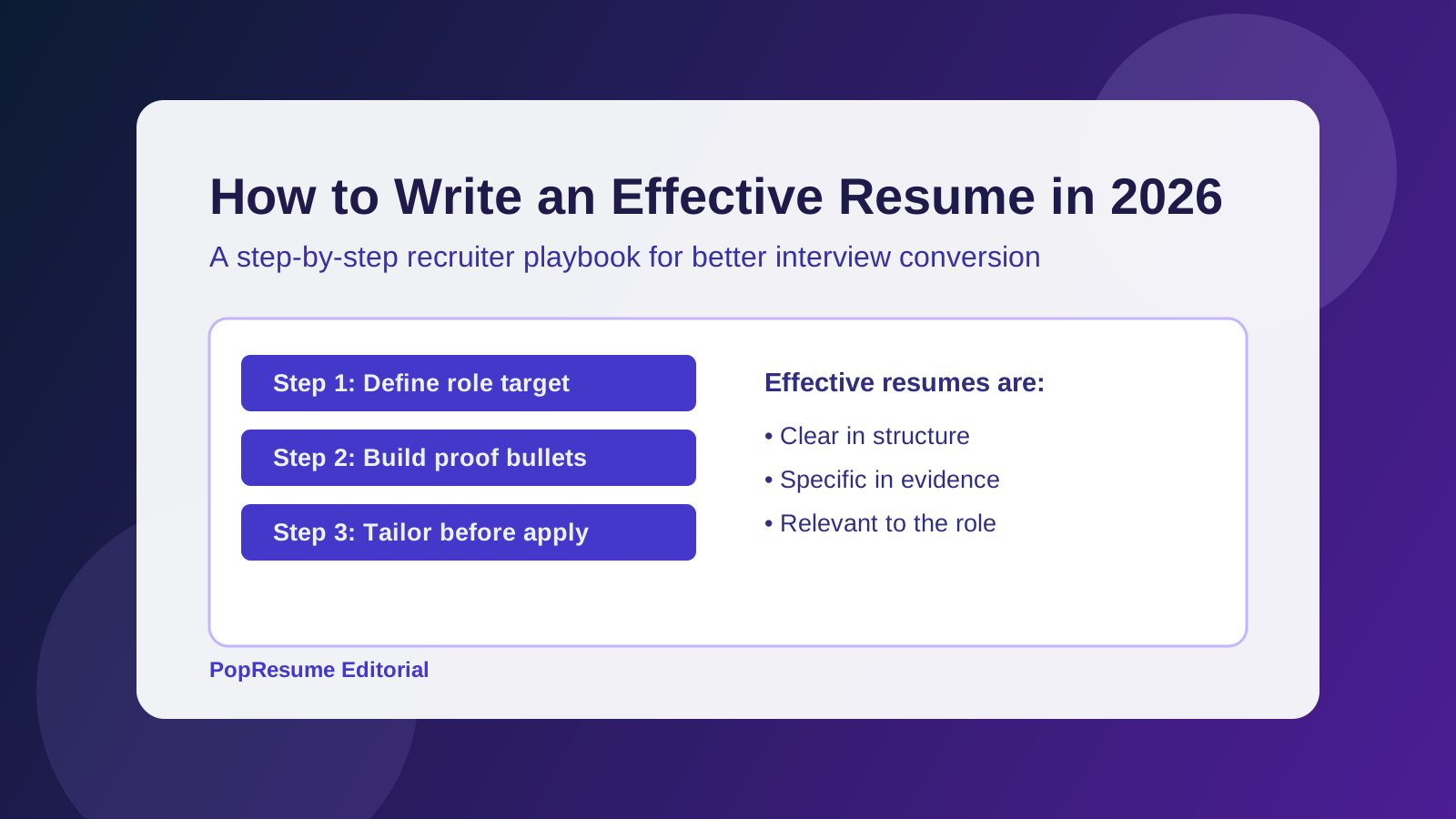
An effective resume gets you moved forward by both software and people. That is the standard.
After 20 years in recruiting, I can tell you that most candidates focus on wording but ignore structure and evidence. The result is a resume that sounds polished but does not convert.
What Effective Means in Recruiting
An effective resume does four things:
- Clarifies role fit in the top section.
- Shows measurable outcomes in recent roles.
- Reflects the language of the target posting.
- Stays easy to parse and easy to skim.
If one of those fails, interview conversion usually drops.
Step 1: Define Your Target Role Before You Write
Do not start with formatting. Start with target.
Pick one role family and level for this version of your resume. If you are applying to multiple role families, create separate versions.
I recommend keeping a simple role brief:
- Target title(s)
- Required tools
- Core responsibilities
- Must-have outcomes
This prevents generic messaging and improves keyword alignment.
Step 2: Build a Summary That Earns Attention
Your summary should be short, specific, and outcome-oriented.
Weak summary:
Motivated professional with strong communication skills seeking growth opportunities.
Effective summary:
Customer Success Manager with 6 years in B2B SaaS, leading renewal and expansion programs that improved net revenue retention from 103% to 116% across 2 enterprise segments.
Use plain language. Keep claims defensible.
Step 3: Prioritize Proof Over Claims
Recruiters trust proof, not adjectives.
Replace vague statements with outcome-backed bullets.
- Instead of
Strong leadership skills, useManaged 7-person team across onboarding and support operations, improving first-response SLA compliance from 82% to 96%. - Instead of
Excellent communicator, useBuilt weekly executive pipeline narrative adopted by CRO and finance for forecast review.
Numbers are not required in every bullet, but they should appear often enough to establish credibility.
Step 4: Make Your Experience Section Decision-Ready
For each role:
- Include title, company, and dates clearly.
- Keep 3 to 5 high-signal bullets.
- Start with role-relevant outcomes.
- Deprioritize unrelated tasks.
Ordering matters. The first two bullets are usually the most read.
Step 5: Match Keywords With Real Evidence
Use posting language where it matches your real experience.
Process:
- Pull repeated terms from the job description.
- Place those terms in summary, skills, and experience bullets.
- Ensure each term is supported by concrete context.
Avoid copy-paste blocks of keywords. They are easy to spot and easy to distrust.
Step 6: Use Clean Formatting for ATS and Humans
- Use standard section names.
- Keep formatting consistent across dates and bullets.
- Avoid visual elements that can break parsing.
- Keep line length readable.
Treat formatting as infrastructure. It should not attract attention.
Step 7: Final QA Before You Apply
Use a final gate before every submission:
- Role and level are obvious in top section.
- Top requirements are visible on page one.
- Outcome evidence appears in each recent role.
- Skills section mirrors posting language accurately.
- No broken formatting, typos, or inconsistent dates.
Then run your file through the Free ATS Resume Checker before submission.
Final Recruiter Take
A resume is effective when it reduces uncertainty for the hiring team.
If I can quickly understand your fit and trust your evidence, you get interviews.
Build your strongest version in the AI Resume Builder, validate technical readability with the Free ATS Resume Checker, and track which resume variants perform best in the Job Application Tracker.
Sources
Last checked: April 20, 2026.