
How to Pass the ATS: A Recruiter’s 20-Year Playbook
After 20 years screening resumes, I can tell you exactly why qualified people get filtered out. This is the practical ATS playbook I would use to increase interview odds right now.
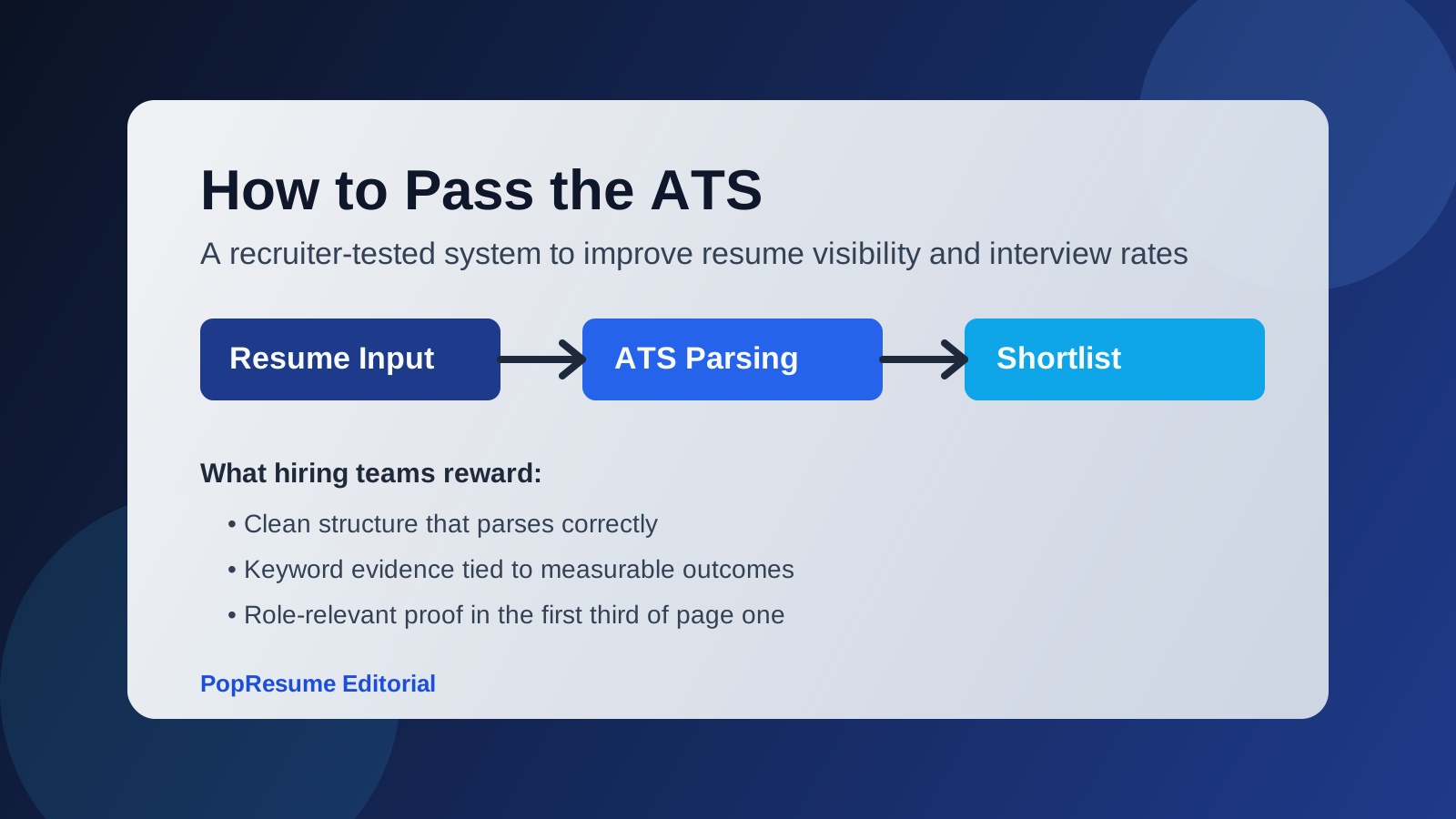
I have reviewed resumes for roughly 20 years across entry-level roles, technical roles, revenue roles, and leadership hiring. The pattern is incredibly consistent. Most candidates who struggle are not unqualified. They are getting filtered out because their resume is unclear, untargeted, or difficult for screening systems to interpret.
If you want to pass the ATS, stop thinking about tricks. Think about signal clarity. ATS success comes from structure, relevance, and evidence. This article gives you the exact process I would use if I were applying in a competitive market today.
What Most Candidates Get Wrong About ATS
The biggest misunderstanding is believing ATS is a single robot that rejects people for mysterious reasons. In real hiring environments, ATS platforms are systems of record. They help teams store, search, sort, and review candidate information. Recruiters still make decisions, but they move faster when the resume data is clean and relevant.
What hurts candidates is not usually one catastrophic error. It is cumulative friction:
- A generic headline with no target role signal
- Bullets with activity language and no measurable outcomes
- Missing keywords that are central to the role
- Formatting that creates inconsistent parsing of fields
When these stack up, your resume looks weak in quick review. That is where interview rates collapse.
How Screening Actually Works in Real Hiring Teams
In many teams, the process goes like this:
- Application enters ATS.
- Resume is parsed and attached to a candidate profile.
- Recruiter reviews either a queue, a filtered list, or a search result.
- Recruiter decides who moves to phone screen.
The key insight is that you are evaluated in two layers. First layer is retrieval and readability. Second layer is recruiter judgment. If your resume is not easy to find and easy to trust, your real qualifications do not get full credit.
I tell candidates this all the time: the first job of your resume is to survive process. The second job is to win a human decision.
If you want a quick baseline before applying, run your draft through the Free ATS Resume Checker.
Step 1: Pick a Target Role and Build a Keyword Map
One resume for every job is a low-conversion strategy. High performers choose a role family and tailor from a strong base version.
Here is the workflow I use with coaching clients:
- Select 3 target postings that represent the same role type.
- Highlight repeated hard skills, tools, and domain terms.
- Group terms into three buckets: must-have, important, and optional.
- Map each must-have term to one bullet that proves you used it in context.
This removes guesswork. You are no longer writing from memory. You are writing against market demand.
Quick example
If postings repeat Salesforce, pipeline hygiene, and forecast accuracy, your resume should not just list those terms in a skills block. It should connect them to outcomes:
Maintained Salesforce pipeline discipline across 140 active opportunities, improving forecast accuracy from 68% to 86% in two quarters.
That line does three jobs at once. It matches keywords, proves practical use, and signals business impact.
Step 2: Use an ATS-Safe Structure Every Time
Design does not get you hired. Clarity gets you hired.
As a recruiter, I trust simple resume structures because they reduce interpretation risk. Here is the structure I recommend for almost every candidate:
- Header with name, phone, email, city, LinkedIn
- Targeted summary with role alignment
- Skills and tools section using plain language
- Experience section with reverse chronological order
- Education and relevant certifications
Formatting rules that consistently work:
- Use one column
- Use standard section titles
- Use consistent date format
- Avoid text boxes and decorative icons
- Keep font readable and spacing clean
I know complex layouts can look impressive. In screening, they often underperform. You are optimizing for comprehension speed, not visual novelty.
For practical resume creation without format risk, build in the AI Resume Builder.
Step 3: Write Bullets That Prove Capability
Most resumes lose here. Candidates describe responsibilities but fail to prove results.
I want to see evidence that answers this question: what changed because you did this work?
Use this formula:
Action + Scope + Method + Result
Weak bullet:
Responsible for managing onboarding for new hires.
Strong bullet:
Led onboarding redesign for 85 quarterly hires, introducing structured manager check-ins that improved 90-day retention by 14%.
Weak bullet:
Helped with monthly reporting.
Strong bullet:
Built monthly performance dashboard for executive review, reducing reporting turnaround from 5 days to 1 day and improving decision speed.
When your bullets are outcome-based, ATS and recruiters both benefit. Systems can match key terms, and humans can quickly trust your value.
Step 4: Tailor Each Submission in 15 Minutes
Tailoring does not mean rewriting everything. It means making targeted edits that improve relevance.
Use this 15-minute cadence:
- Minute 1 to 5: Update headline and summary to match target role language.
- Minute 6 to 10: Swap in top 3 role-critical bullets near the top of experience.
- Minute 11 to 15: Align skills section with must-have terms from posting.
That is enough to materially improve interview odds.
Candidates who apply with identical resumes to 50 jobs often underperform candidates who submit 15 tailored applications. Precision beats volume more often than people think.
Use the Job Application Tracker to monitor which resume version gets callbacks. Treat your job search like a performance system.
Step 5: Run Final QA Before You Apply
Before you click submit, do this final checklist:
- Does my top section clearly match the role?
- Are the most relevant skills visible early?
- Do my top bullets contain measurable outcomes?
- Are all claims defensible in an interview?
- Is the format clean in plain text and PDF view?
- Did I remove irrelevant experience that dilutes fit?
This takes five minutes and can prevent weeks of lost momentum.
ATS Readiness Card
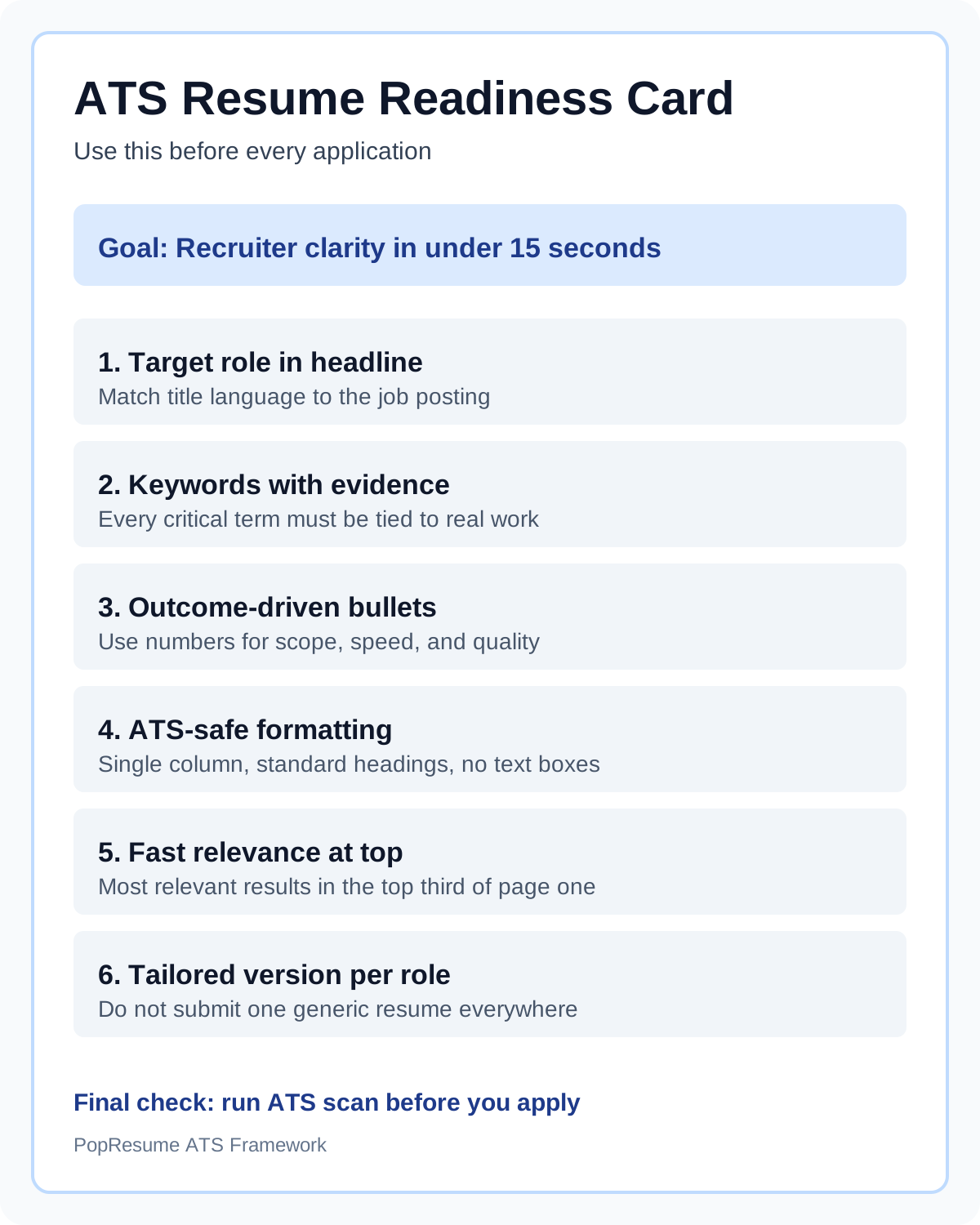
If you want one rule to remember, it is this: your resume should make sense fast, even to someone who has not met you.
Common ATS Myths That Kill Interview Rates
Myth 1: I should paste every keyword to beat the system
Keyword stuffing makes resumes look untrustworthy. Recruiters notice. Use exact terms only where they reflect real experience.
Myth 2: Fancy design helps me stand out
For most roles, complex layouts reduce clarity and can create parsing issues. You stand out by proving outcomes, not by adding visual noise.
Myth 3: ATS automatically rejects resumes without human review
In practice, hiring teams vary. Many recruiters still manually review high-intent applicants. But manual review is still fast, so your resume must be easy to evaluate.
Myth 4: One strong resume is enough for every job
No. Different roles prioritize different signals. A tailored base version will outperform a universal resume in most competitive searches.
What to Do This Week If You Need Results Fast
If your callback rate is low right now, use this plan:
- Day 1: Pick one role family and collect three target postings.
- Day 2: Rebuild headline, summary, and skills for role fit.
- Day 3: Rewrite 10 bullets using action, scope, method, result.
- Day 4: Run ATS check and clean formatting issues.
- Day 5: Submit 5 tailored applications.
- Day 6: Track callbacks by resume version.
- Day 7: Keep winning version and iterate weak areas.
This is not theory. This is the exact cadence I have seen produce better response rates in real hiring markets.
Final Recruiter Opinion
Passing the ATS is not about hacking software. It is about communicating professional value clearly enough that both systems and humans can process it quickly.
When candidates shift from generic resumes to targeted, evidence-driven resumes, the improvement in interview rate is usually noticeable within a few weeks.
If you are serious about improving outcomes, run your current resume through the Free ATS Resume Checker, build a cleaner version in the AI Resume Builder, and track performance in the Job Application Tracker. Measurable progress comes from measurable process.
Sources
Last checked: April 21, 2026.